


You’re gagging while brushing your teeth, coffee suddenly smells criminal, and the man responsible for 50% of this entire situation is sleeping peacefully beside you like he has no enemies. So, is his sperm quality actually behind how rough your pregnancy symptoms feel? Probably not. Current evidence does not show that sperm quality determines how strong your pregnancy symptoms will be.
But the rumor is not completely random. Pregnancy nausea is strongly linked to a hormone called GDF15, much of which comes from the fetus and placenta, and Dad did contribute roughly half of the baby’s nuclear DNA.
That is where TikTok grabs the red string and turns “paternal genetics can matter” into “his elite sperm made you sick.”
Cute theory. Wrong department.
Let’s separate sperm quality, paternal genetics, fetal biology, and the symptoms currently ruining your relationship with toothpaste.
💜 Skip to the Good Stuff
💡Quick Facts:
- Sperm quality is not one magical score. Semen analysis looks at several different measurements.
- Paternal genetics and semen parameters are not the same thing.
- GDF15 is strongly involved in pregnancy nausea and vomiting.
- Sperm health can matter for fertility and some reproductive outcomes.
- Mild or severe pregnancy symptoms do not tell you whether his sperm was “good” or “bad.”

Does Sperm Quality Actually Affect Pregnancy Symptoms?
What your symptoms can tell you
Girl, pregnancy symptoms are dramatic enough without turning them into a semen analysis.
You can be six weeks pregnant, gagging because somebody toasted bread three rooms away, and still have no scientific basis for deciding his sperm must have been spectacular.
One pregnancy might have you:
- nauseous from morning to night;
- surviving on crackers and spite;
- unable to tolerate your favorite perfume;
- or suddenly offended by chicken.
Another might have you feeling suspiciously normal.
Neither experience tells us his sperm count, motility, morphology, or DNA quality.
So no, barely feeling sick does not mean his sperm was poor. And vomiting because somebody opened the refrigerator does not mean he released the Michael Phelps of sperm.
Why the rumor sounds believable
Dad really can influence the pregnancy after conception. He contributes roughly half of the fetus’s nuclear DNA, and the fetus and placenta produce signals that interact with Mom’s body.
That is the real biology underneath the rumor.
The internet then makes one enormous leap:
- Dad contributed genes.
- The baby can influence Mom’s body.
- Therefore, sperm quality controls pregnancy symptoms.
Nope.
Paternal genetics are not sperm quality. One is the genetic material Dad passed to the fetus. The other refers to characteristics measured when sperm and semen are evaluated.
That distinction is the whole case.
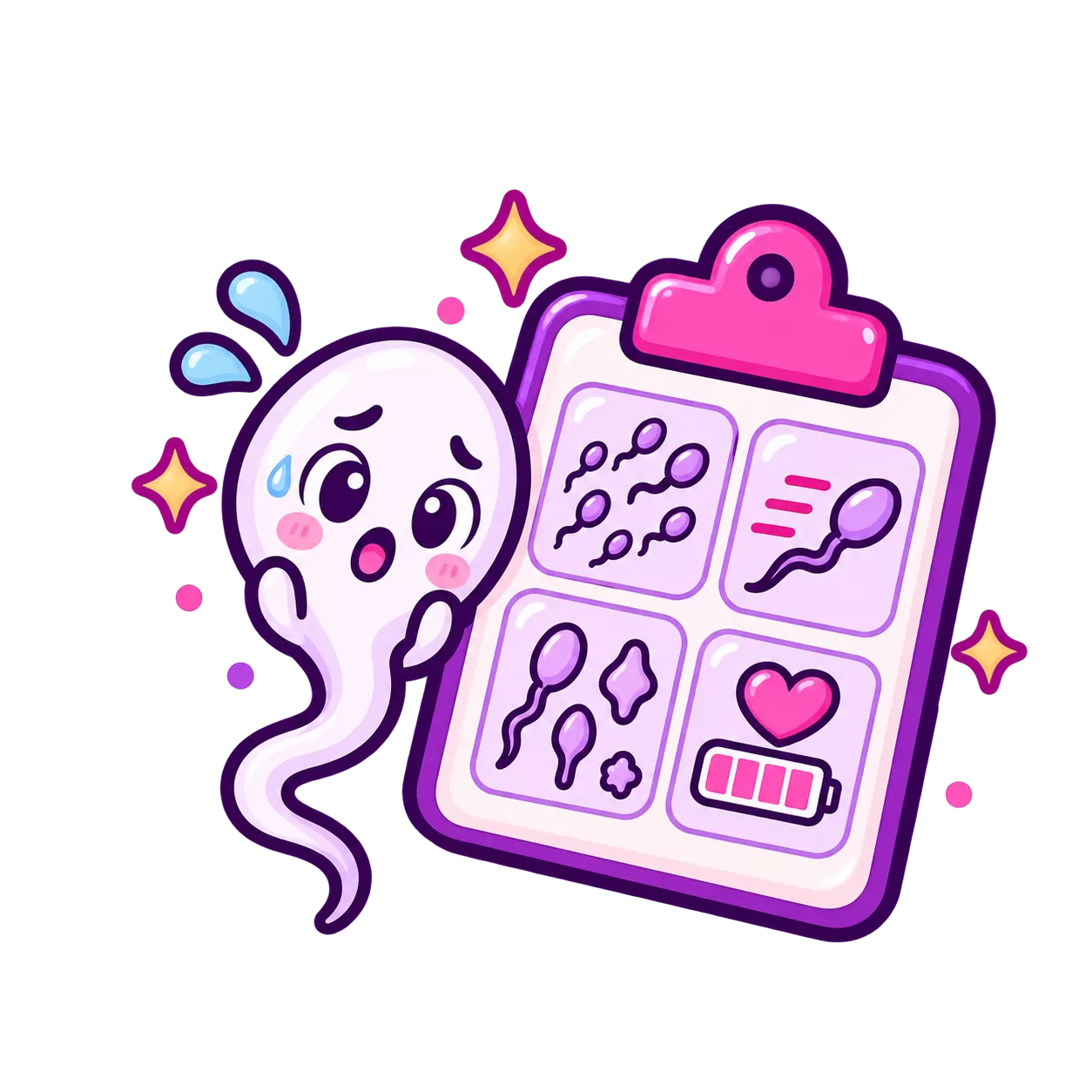
What Does “Sperm Quality” Actually Mean?
Okay bestie, first thing: “sperm quality” is not one score.
There is no laboratory certificate saying:
Congratulations. Your sperm received 96%.
Expected pregnancy symptoms: catastrophic.
What doctors actually measure
Common semen-analysis measurements include:
- Sperm concentration: how many sperm are present per milliliter.
- Total sperm count: how many are present in the full ejaculate.
- Motility: how many are moving and how they move.
- Morphology: how many have a typical shape.
- Vitality: how many are alive, when that measurement is needed.
Those numbers do not always move together. A man can have plenty of sperm but lower motility. Another can have fewer sperm but a decent proportion moving well.
So when somebody confidently says, “His sperm quality was amazing,” our first question is:
According to which damn column, babe?
Sperm DNA is a separate layer
Sperm DNA fragmentation is not the same thing as count, motility, or morphology. A sample can look reassuring on routine measures and still have elevated DNA fragmentation.
That matters in some fertility and reproductive-outcome conversations.
What it does not give us is a nausea forecast.
Lower fragmentation does not buy you a peaceful first trimester. Higher fragmentation does not guarantee that toast becomes your mortal enemy.
Different question. Different evidence.
And no, you cannot reliably judge sperm health by how semen looks, how fit he is, whether he takes supplements, or whether you conceived quickly. Fertility is not a one-man group project.
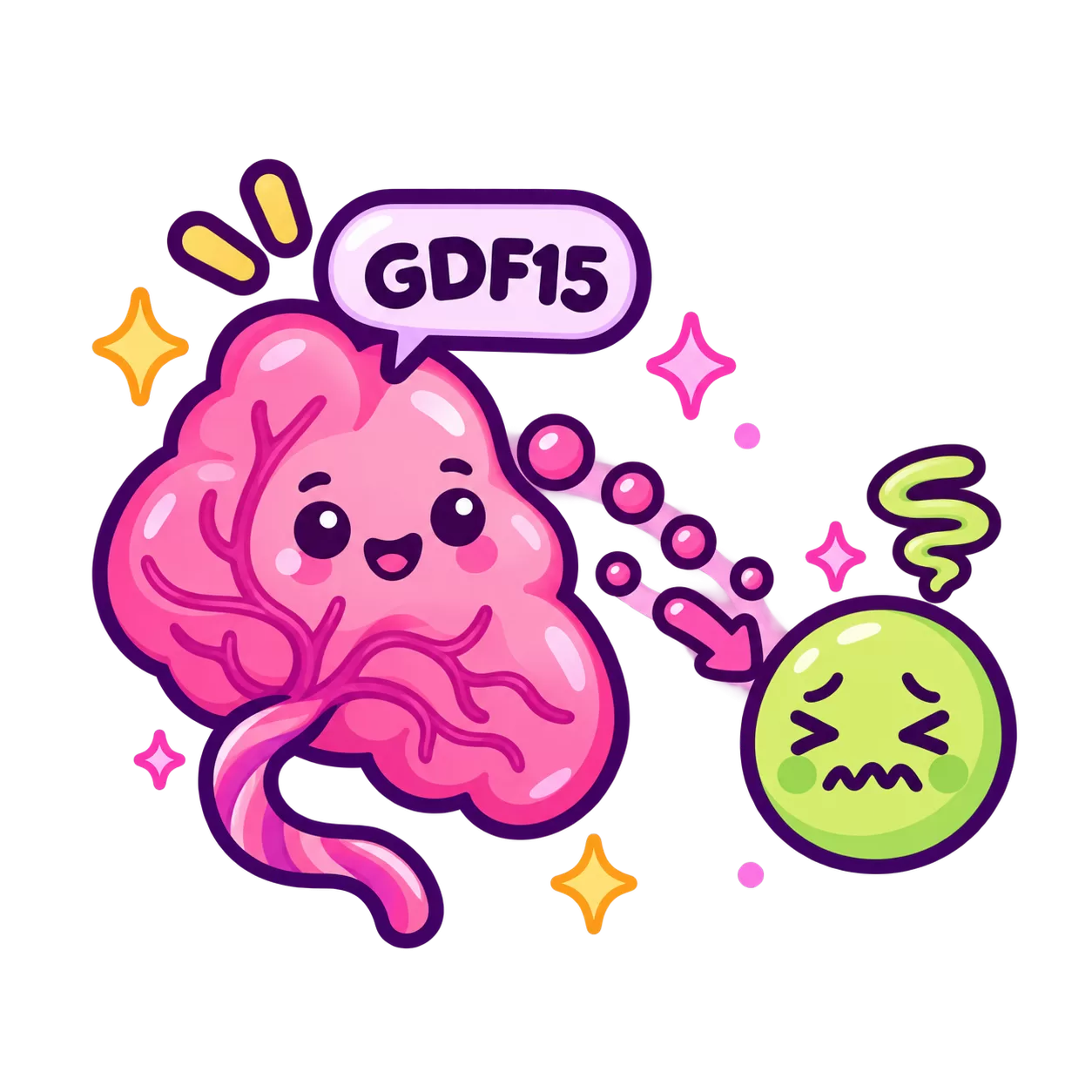
The GDF15 Plot Twist: Your Baby Really Can Affect Morning Sickness
Okay girl, this is where the gossip finally gets scientifically interesting.
GDF15 is a hormone that acts on a brainstem pathway involved in nausea, appetite, and food aversion. Researchers found higher GDF15 levels in women with vomiting in pregnancy and hyperemesis gravidarum. They also found that most circulating maternal GDF15 during pregnancy came from the feto-placental unit.
Translation: your pregnancy really can be involved in the reason eggs suddenly feel like a personal attack.
Rude.
Tiny.
But rude.
Why two women can feel completely different
GDF15 is only part of the story. The same research suggests Mom’s sensitivity to pregnancy-related GDF15 matters too, and that sensitivity may partly depend on her exposure to GDF15 before pregnancy.
So this is not:
more GDF15 = more misery
and everybody goes home.
The nausea story involves both the signal coming from the pregnancy and how Mom responds to it.
That helps explain why one woman is ordering Thai food while another smells rice cooking three houses away and has left the group chat.
Where Dad’s genes fit
Dad contributes roughly half of the baby’s nuclear DNA, so his genetic material becomes part of fetal genotype.
A large 2026 analysis identified fetal genotype effects in severe pregnancy nausea and vomiting, including effects involving GDF15.
That is genuinely fascinating. It still does not mean:
- better sperm causes worse morning sickness;
- sperm count predicts nausea;
- high motility guarantees food aversions;
- or a semen analysis predicts symptom severity.
Fetal genetics are not a sperm-quality score.
And yes, GDF15 has also been found in seminal plasma. But researchers found it was not associated with semen quality or whether donors were fertile or infertile.
So the scientifically accurate version is interesting enough: fetal and placental biology can influence pregnancy nausea, and fetal genetics come from both parents.
We do not need to promote Dad’s sperm to Marvel superhero status.
So, Can His Health Affect Your Pregnancy Symptoms?
Maybe he smokes, drinks, sleeps five hours a night, and treats vegetables as decorative.
Or maybe he meal-preps salmon, runs 5Ks, and owns a water bottle the size of a toddler.
Surely that changes something?
Yes. Just not necessarily your morning sickness.
His health can affect reproductive health
A man’s health and habits can matter to fertility. Cigarette smoking, for example, is associated with lower sperm concentration and motility, with possible effects on morphology too.
So his lifestyle can affect things such as:
- sperm production;
- semen parameters;
- fertility;
- and reproductive health more broadly.
What we cannot turn that into is:
healthy man → healthy sperm → easy pregnancy
Biology did not sign that contract.
A man can do everything “right” before conception, and his partner can still have relentless nausea. Another woman can conceive with a partner whose habits would make a fertility subreddit call an emergency meeting and feel almost fine.
His health can matter to his sperm. Your symptoms are not his report card.

Where Sperm Quality Really Does Matter
We have spent enough time acquitting sperm quality of nausea-related crimes.
That does not mean sperm health is irrelevant.
The places it actually belongs
Male reproductive factors matter much more naturally in conversations about:
- getting pregnant;
- male-factor infertility;
- sperm DNA fragmentation;
- recurrent pregnancy loss;
- and possible pregnancy outcomes researchers are still studying.
Semen analysis is a standard part of male fertility evaluation because those measurements can help clinicians understand what may be affecting conception.
That is a real job for sperm quality.
Explaining why you almost vomited because your husband reheated leftovers six weeks later is not.
Sperm DNA and recurrent pregnancy loss
A 2024 umbrella review found sperm DNA fragmentation associated with recurrent pregnancy loss. It also found suggestive evidence involving progressive motility, while evidence for several other routine semen parameters was weaker.
Important caveat: the methodological quality of the included meta-analyses was rated low or very low.
Translation? There is an association worth taking seriously, but “associated with” does not mean “this caused an individual miscarriage.”
Current AUA/ASRM guidance recommends evaluating the male partner in couples with recurrent pregnancy loss, including sperm DNA fragmentation testing.
So yes, paternal factors can matter beyond fertilizing the egg.
That is still a very different statement from “his sperm quality made me throw up.”
What about later pregnancy complications?
Researchers are also studying links between male fertility factors and later pregnancy outcomes.
In one exploratory study of subfertile couples undergoing assisted reproduction, researchers found a higher preeclampsia incidence when the male partner had oligoasthenospermia, meaning lower sperm numbers plus reduced motility, compared with normospermia.
Interesting? Absolutely.
Proof that poor sperm quality causes preeclampsia in pregnancies generally? No.
The study involved a specific assisted-reproduction population, and the authors called for more research.
Pregnancy outcomes and pregnancy symptoms are different questions. That distinction matters.

Can Your Pregnancy Symptoms Tell You Anything About His Sperm?
Once you hear this rumor, it becomes dangerously easy to reverse-engineer your whole pregnancy.
I barely feel nauseous. Was his sperm bad?
I feel horrific. Does this mean his sperm was elite?
My symptoms changed today. Is something wrong?
Girl, pregnancy already gives us enough material for a 2 a.m. Google spiral.
Mild versus severe symptoms
Here is what symptoms do not tell us:
- Mild nausea does not mean “bad” sperm.
- Severe nausea does not mean “strong” sperm.
- Food aversions do not reveal sperm motility.
- Smell sensitivity does not score morphology.
- A symptom-free day does not produce a semen-analysis result.
Pregnancy symptoms can vary between women, between pregnancies, and from day to day.
They are not a sperm-quality meter.
Your symptoms are not a health score either
This is where the joke stops being funny, because symptom changes can trigger very real anxiety.
If your nausea suddenly eases, your boobs hurt less, or you simply feel more normal than yesterday, it is easy to start treating your body like a live pregnancy dashboard.
It is not one.
If a symptom change worries you, contact your prenatal care team rather than trying to reverse-engineer the answer from how sick or normal you feel.
And if you want the full tour of pregnancy’s weird little betrayals, our guide to weird pregnancy symptoms goes much deeper into that circus.
When nausea needs medical attention
Nausea and vomiting are common in pregnancy, but severe or persistent vomiting can become medically serious.
ACOG lists signs of dehydration, including:
- very little or dark urine;
- being unable to keep liquids down;
- dizziness or fainting when standing;
- a racing or pounding heartbeat.
You do not need to hit some imaginary suffering quota before you are allowed to ask for help.
If you cannot stay hydrated, symptoms are severe or worsening, or something feels wrong, call your prenatal care team.
And please do not sit there dehydrated thinking:
Well, at least his sperm must have been incredible.
Girl. Call your doctor. He can survive without the compliment.
So… Is It His Fault?!
The verdict is in.
Is his sperm quality responsible for your pregnancy symptoms? No, not based on the evidence we currently have.
Sperm health matters in fertility medicine. Paternal genetics matter because Dad contributes DNA to the baby. Fetal and placental biology can influence pregnancy nausea. GDF15 is a major part of that story.
All of those things can be true without your first-trimester symptoms becoming a sperm-quality scoreboard.
So if you are curled around a sleeve of crackers, glaring at the man who helped create this pregnancy and wondering whether you are entitled to blame him…
Emotionally?
Absolutely. Blame him a little.
Scientifically?
We are going to need stronger evidence before we put his swimmers behind bars.