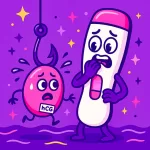


Hey gorgeous! Let’s cut straight to it: Yes, it’s possible to be pregnant and never see a clear positive on a urine test (but it’s rare.)
Most of us are familiar with the usual culprits by now (testing too early, diluted urine, expired strips). That’s not what this post is about. You’re here because you’ve heard whispers, or maybe lived through those stories. Some women swear they were weeks, even months along, and still staring at blank tests or faint lines.
So what gives? The answer lies in how your body makes and processes the pregnancy hormone hCG. In some cases, unique quirks like hormone variants, “hook effects,” or even rare conditions like cryptic pregnancy can keep those test lines from ever showing up.
Before we dive into the juicy details, here are a few quick facts to clear things up for our TTC babes who want answers right now.
💜 Skip to the Good Stuff
Quick Facts: Can You Be Pregnant and Never Test Positive?
Yes – it’s rare, but it happens. A woman can be pregnant and still get negative results on urine tests because of:
- hCG variants that some strips don’t detect well.
- Hook effect when hormone levels are oddly high or fragmented.
- Ectopic pregnancy or slow-rising hCG, too low for urine thresholds.
- Kidney or metabolic factors that alter how hCG shows up in urine.
- Cryptic pregnancy cases, where urine tests never confirm, but blood work and ultrasounds do.
💡 Key point: In nearly all reported cases, a blood hCG test or ultrasound eventually confirmed the pregnancy. So if your gut says you’re pregnant despite negatives, you’re not crazy. You may just need a different test.
Can You Be Pregnant and Never Test Positive?
Yes, it is possible to be pregnant and never see a positive result on a urine test, though it is rare. Most at-home tests detect the hormone human chorionic gonadotropin (hCG) once it reaches a set threshold in urine. For some women, the body produces hCG in unique forms, at unusual levels, or clears it in ways that make detection harder. That is why a blood test, which is more sensitive and can recognize a wider range of hCG variants, often confirms a pregnancy that urine tests continue to miss.
Why This Happens Rarely but Does Happen
Most of the time, a negative result simply means the test was taken too early. But in a small group of women, the explanation is different. Pregnancy hormones may not rise in the way most test strips expect. For example, some women produce hCG more slowly, while others excrete very little of it in urine even if blood levels are normal. And then there are those whose bodies make more of the “variant” forms of hCG, which some brands don’t detect well. All of these quirks mean the test window stays blank even while a pregnancy develops.
What Makes Beta Blood Tests Different
- Greater sensitivity: Blood draws can pick up hormone levels as low as 1–2 mIU/mL, compared with the higher thresholds of most urine strips.
- Wider detection: Serum testing captures all forms of hCG, including fragments that confuse or bypass urine assays.
- Clinical confirmation: Doctors rely on blood results (and ultrasounds) whenever urine tests don’t match symptoms, because it is the gold standard for detection.
Real-World Scenarios Where This Occurs
Stories of “negative tests but still pregnant” usually fall into a few categories. Ectopic pregnancies, for example, may produce hCG so slowly that urine levels never climb high enough to trigger a line. In cryptic pregnancies, some women never record a positive urine test at all, only discovering the pregnancy through a blood test or even an ultrasound months later. And then there is the rare “hook effect,” when hormone levels get so high that the test strips malfunction, hiding the pregnancy unless the urine is diluted first.

Common Reasons Pregnancy Tests Show False Negatives
Before we get into the rare and fascinating stuff, let’s do a quick lap around the basics. These are the reasons most of us already know, the “duh” factors that still trip people up. And while they matter, they’re not the whole story.
Testing Too Early
Patience may be a virtue, but it’s not exactly common in the TTC community. Most of us are testing before the ink is dry on ovulation day. The problem? Home tests usually only flip positive once hCG reaches about 20–25 mIU/mL. That’s often on or a few days after the first missed period. Test too early and you might as well be waving a magic wand over the stick; nothing’s going to appear.
Diluted Urine Samples
Morning pee (FMU) is queen. By afternoon, after guzzling water, coffee, or a green juice, urine can be so diluted that hCG slips under the radar. Tests aren’t fooled by vibes – they need concentrated hormones. If you’re testing at happy hour instead of sunrise, don’t be surprised if the line ghosts you. It is, however, important to note that some babes report stronger lines with SMU (Second Morning Urine). Do with that info whatever you wish, bestie.
Test or User Error
Sometimes it’s not the body, it’s the box.
- Expired strips: They’re like mascara, past their prime, they won’t perform.
- Bad timing: Reading too soon or too late is like opening the oven mid-bake – things get messy.
- Brand sensitivity: Some tests catch whispers of hCG at 6–10 mIU/mL, while others need a full-on shout at 25 or even 50 mIU/mL.

Rare Causes of Never Getting a Positive Pregnancy Test
Okay, here’s where it gets interesting. We’ve all heard the early-testing excuses, but what about the women who never see a dark line, no matter how long they wait? These cases are rare, but they’re real – and they usually come down to how the body makes, breaks down, or clears the pregnancy hormone hCG.
hCG Variants That Slip Past the Test
Pregnancy tests are designed to detect one main form of hCG, but the body actually makes several. Early on, hyperglycosylated hCG dominates, while later, the beta-core fragment builds up. If a test brand doesn’t recognize those specific forms, the result can stay negative even while a pregnancy grows. Think of it like showing up to a masquerade ball; the hormone is there, but in the wrong outfit, so the test doesn’t recognize her.
The Hook Effect (When Too Much Is a Problem)
Strangely enough, very high hCG levels can cause the opposite of what you’d expect. This is called the “hook effect.” When there’s an overload of hormones, the antibodies on the strip get overwhelmed, and the test line fails to form. It’s like too many guests crowding the door at once – nobody gets through. In these cases, diluting the urine sample (yes, literally adding water) can sometimes make the line appear. Sounds interesting? Read more about the Hook Effect here.
Ectopic Pregnancies and Slow-Rising Hormones
In an ectopic pregnancy, where the embryo implants outside the uterus, hCG often rises much more slowly. That means urine levels may never climb high enough to flip a positive. Doctors always check with blood draws and ultrasounds when symptoms suggest pregnancy, but tests say otherwise. This is also why persistent negative tests with cramping or one-sided pain deserve medical attention ASAP.
Other Rare Scenarios Worth Noting
- Kidney function issues: If the kidneys don’t excrete hCG properly, urine levels may not reflect what’s in the blood.
- Cryptic pregnancies: Some women never get a positive urine test, even months in, discovering the pregnancy only via blood work or ultrasound.
- Hormonal quirks: Unique metabolism patterns may change how fast hCG is cleared or what form dominates, keeping urine results negative.

Does Fast Metabolism or Liver Function Affect hCG Levels?
The TTC community loves to swap theories, and one that comes up often is the idea that an “overactive liver” or metabolic quirk could clear pregnancy hormones too quickly for urine tests to catch. Some women even wonder if conditions like intrahepatic cholestasis of pregnancy (ICP) are linked to those stubborn negatives.
The Science We Know
So far, there’s no hard medical evidence that a speedy liver or cholestasis directly prevents hCG from showing up on urine tests. hCG is produced by the placenta, circulates in the blood, and is filtered out by the kidneys. While the liver plays a role in hormone metabolism, studies and clinical guidelines for ICP focus on bile acids and liver function, not hCG. In other words, science has not proven that the liver alone explains negative urine tests.
Why the Theory Persists
Still, the idea isn’t wild. Every body handles hormones differently, and anecdotal stories show women who’ve only got confirmation through blood draws, never urine. Some possibilities that fuel this theory include:
- Faster hormone clearance that reduces hCG concentrations in urine.
- A shift toward hCG fragments that aren’t well detected by some brands.
- Community experiences of “never a positive test” keep the conversation alive.
What This Means for TTC Babes
At the end of the day, a negative urine test doesn’t always close the case. If symptoms point to pregnancy, missed periods, nausea, fatigue, breast tenderness, a blood test and ultrasound are the only way to be sure. So while the “fast liver” theory is intriguing, the best advice remains simple: trust your instincts, and push for further testing if the stick keeps saying no but your body says yes.

Cryptic Pregnancies and Late Positives: What’s Really Happening
Every TTC forum has that one jaw-dropper story. A woman who’s months along before she finds out she’s pregnant. No missed period, no morning sickness, and sometimes never a single positive urine test. This phenomenon is called a cryptic pregnancy, and while it’s rare, it’s real enough to get doctors’ attention.
What a Cryptic Pregnancy Looks Like
A cryptic pregnancy can go unnoticed for weeks or even months. Women in these cases often report:
- Irregular, light bleeding that feels like a period.
- Full on “periods” that come right on time.
- Pregnancy symptoms so mild that they’re brushed off.
- Consistently negative urine tests, even in the second trimester.
- Discovery of pregnancy only through ultrasound, late blood testing… or during birth!
Why Tests Miss It
The exact science is still a little murky, but theories include:
- Low or slow-rising hCG: Levels never climb high enough for urine tests to catch.
- Unusual hCG forms: Hormone variants slip past some brands.
- Body chemistry quirks: Fast clearance or unique metabolism keeps urine levels deceptively low.
The Emotional Side
Finding out you’re pregnant months in can be a whirlwind. Shocking, overwhelming, and sometimes even isolating. Many women in cryptic pregnancy stories describe frustration at not being believed by doctors or feeling “gaslit” by repeated negative urine tests. For TTC babes reading this, it’s a reminder: a blank stick doesn’t always tell the full story, and your body’s signals deserve to be taken seriously.

What To Do If You Suspect Pregnancy Despite Negative Tests
So what if the stick keeps saying no, but your body is screaming yes? This is where a little strategy (and a lot of self-advocacy) makes all the difference. Here’s how to take control when the tests aren’t lining up with your symptoms.
Step Up Your Testing Game
Switch brands or wait a few days. Different tests have different sensitivities, and sometimes those extra 48 hours make all the difference. Always use first-morning urine, when hormones are most concentrated. If you’re testing late in the day with a big iced coffee in hand, you’re stacking the deck against yourself. Most of our TTC babes recommend using pink dye tests like FRER (First Response Early Response), too.
Ask for a Blood Test
Blood work is the gold standard. A serum hCG test can detect hormone levels far lower than any urine strip and will confirm whether pregnancy is the reason your period’s gone MIA. If your gut says yes but your test says no, this is the next move.
Keep an Eye on Symptoms
Look beyond the stick: missed periods, nausea, tender breasts, exhaustion, food aversions, they’re all classic signs. If these show up together, it’s worth pushing for more answers, even in the face of negatives.
When to Call a Doctor Right Away
Some scenarios are NOT worth waiting on. Get checked immediately if you notice:
- Sharp or one-sided abdominal pain.
- Shoulder pain or dizziness (possible ectopic pregnancy warning signs).
- Heavy or unusual bleeding.
These red flags need urgent care, no matter what the test strip says.
Advocate for Yourself
Doctors are human too, and sometimes they rely too heavily on urine tests. If you’re sure something’s up, speak up. Ask for bloodwork, request an ultrasound, and don’t let anyone dismiss your concerns. You know your body best.
FAQs About Negative Tests During Pregnancy
Not usually. Twins often mean higher hCG levels, which should make tests turn positive faster. But in rare cases, the hook effect can overload the test strip and block detection, keeping the line from showing.
Yes, though it’s rare. Cryptic pregnancy and certain hCG variants can keep urine tests blank even in the second trimester. At this point, blood tests and ultrasounds are the only reliable ways to confirm pregnancy.
A late period with negative urine tests could mean delayed ovulation, an early miscarriage, or a pregnancy that hasn’t been picked up yet. If your cycle is this late, request a blood hCG test to know for sure.
Only fertility drugs that contain hCG can give a false positive. Most everyday medications, including antibiotics, antidepressants, and birth control, do not affect test results.
Weight changes, bloating, and hormonal shifts can mimic pregnancy. In very rare cases, women with cryptic pregnancies report belly growth while still getting negative tests. An ultrasound is the clearest way to solve the mystery.
Our Takeaway (and Your Next Step)
Pregnancy tests are designed to give answers, but sometimes they don’t tell the full story. While most negatives come down to timing or diluted samples, there are rare but real reasons why some women never see that second line. Hormone variants, hook effects, slow-rising hCG, cryptic pregnancies. They’re not common, but they matter.
The big takeaway? A negative urine test doesn’t always mean “not pregnant.” If your body feels different, if your cycle is off, or if the symptoms are stacking up, trust yourself. Push for a blood test and ultrasound – those are the tools that can finally give clarity when the stick won’t cooperate.
Your journey matters, bestie. Whether you’re navigating the early days of TTC or deep in the two-week wait, you deserve answers and support. Share your story in the comments so our community can hold space for you. Want to reach out to us privately? Send a message in the form below and we *promise* we will get back to you. No one should have to go through this mystery alone.